Workforce Development
Creamos’ Workforce Development Department was established in 2021 after Creamos conducted an array of qualitative interviews and surveys to comprehend the greatest challenges facing the community. What emerged was just how devastating the lack of formal employment opportunities has been on the community. Women cited a wide variety of cultural and economic barriers limiting their options in the formal sphere as well as the need for tangible and marketable skills to enter the workforce. Armed this knowledge, Creamos staff and program participants embarked on a journey to offer more women the opportunity for safe and dignified work.
“Talent is equally distributed, opportunity is not.”
Out of necessity, Creamos participants have been forced to engage in dangerous work in the garbage dump to provide for their families. It may go without saying that this work is extremely dangerous, exposes women to extreme bodily and emotional harm, toxic levels of carbon monoxide and methane gas, and generates an income that barely allows them to provide basic needs for their children, as little as $3 a day. Thousands of women continue to enter the garbage dump everyday and the surrounding neighborhoods remain riddled with chronic underemployment. Many community members view the dump as one of their only means to generate income, given that they are often ostracized from formal employment opportunities. These injustices push members into a cycle of dangerous income-generation within the dump.
In an effort to address these inequities, the Creamos team established The Workforce Development Department to prepare participants to enter the workforce and achieve financial and employment stability. Throughout our programs, we provide vocational skills training and work readiness support in order to bolster their professional development and employability. The department actively connects participants with wider training resources, internships, job opportunities and supplementary psycho-educational services.
Within the department, Creamos staff build bridges and strengthen relationships between a qualified yet overlooked workforce and the formal employment sector, dismantling years of stigma directed towards women living in “red zones” including the community surrounding the garbage dump. This combination of services is designed to close one of the largest gaps that exists within the target community, leading to economic stability for hundreds of women and their families for years to come.
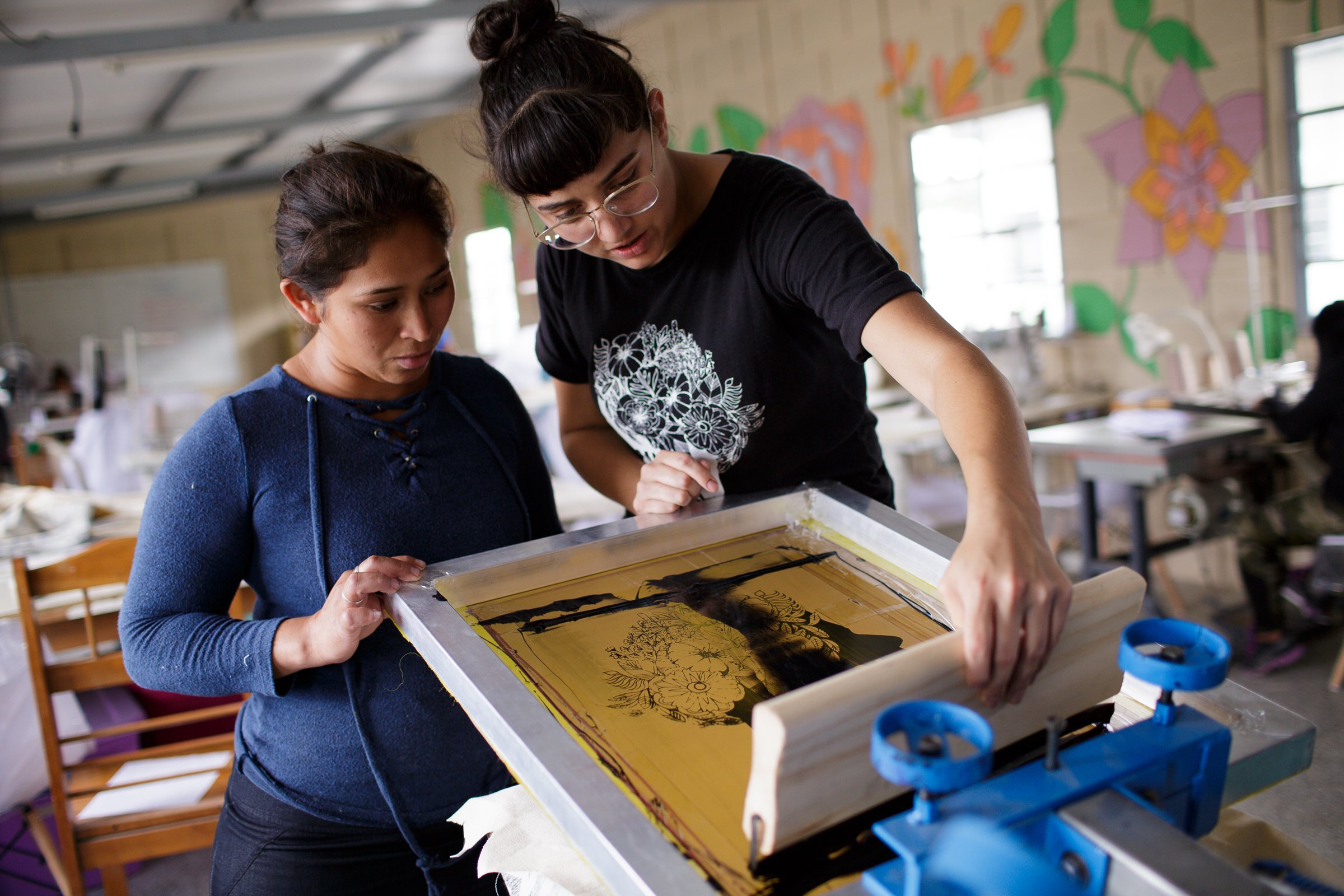
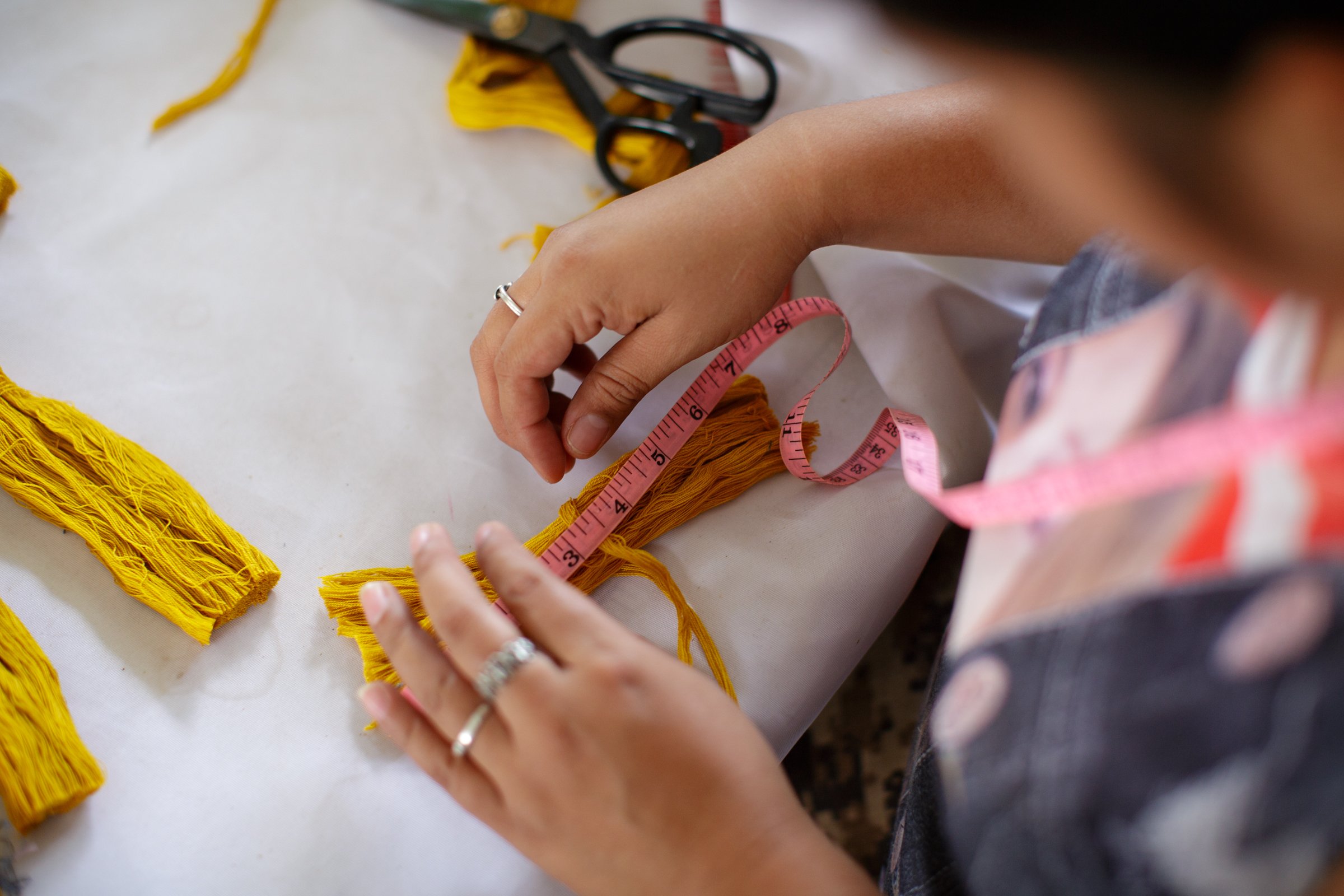
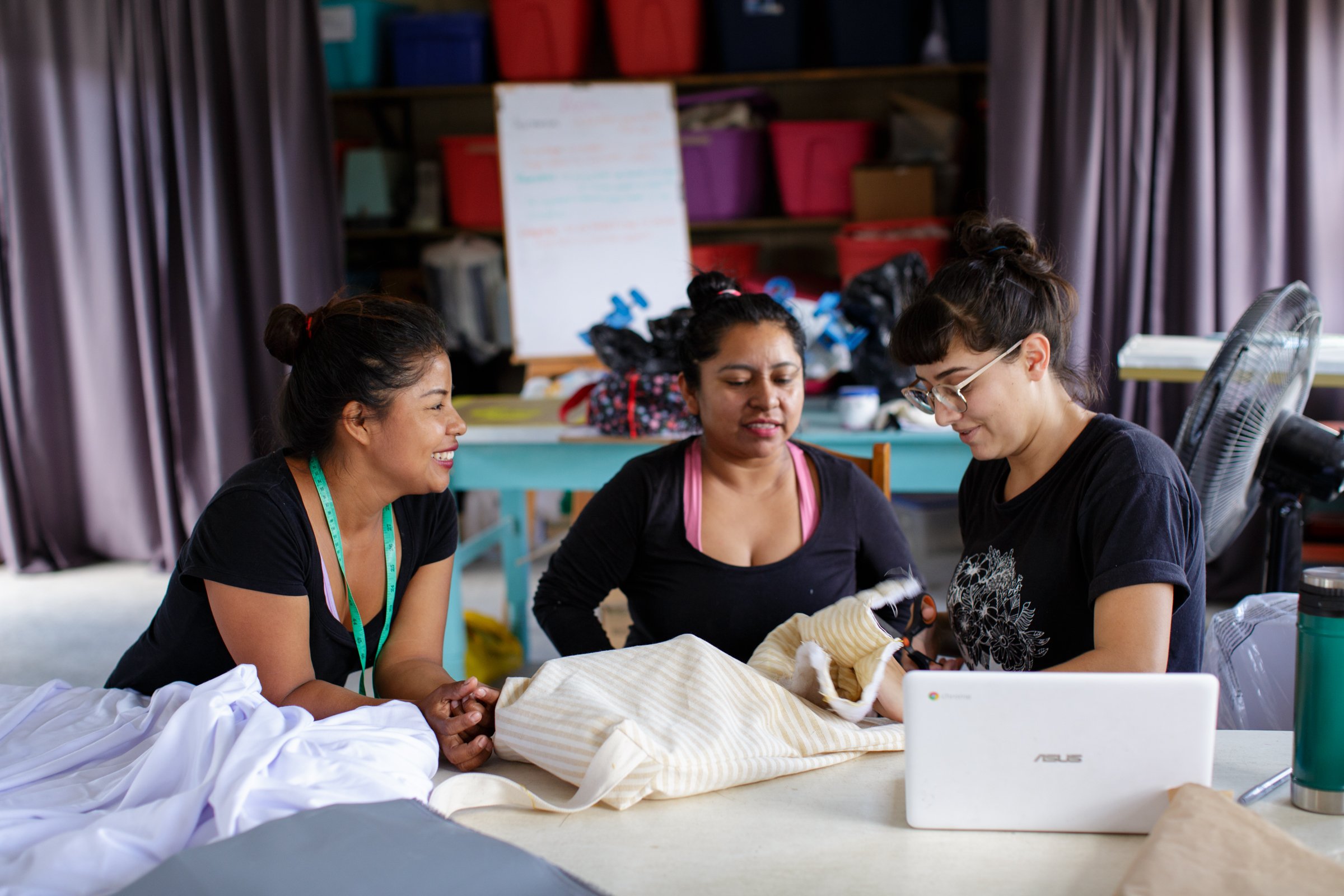

The leadership team supports community members as they develop human capital through training in workforce development and skill-building with the goal of generating new forms of income through self-employment and/or jobs within the formal sector. The elements of this program have been thoughtfully developed to provide holistic and culturally responsive support for this unique group as they develop the skills and competencies necessary to bolster their employability in the formal sector, leaving behind dangerous work.
Course Offerings
Within the department, participants will be offered the opportunity to engage in the following course offerings:
-
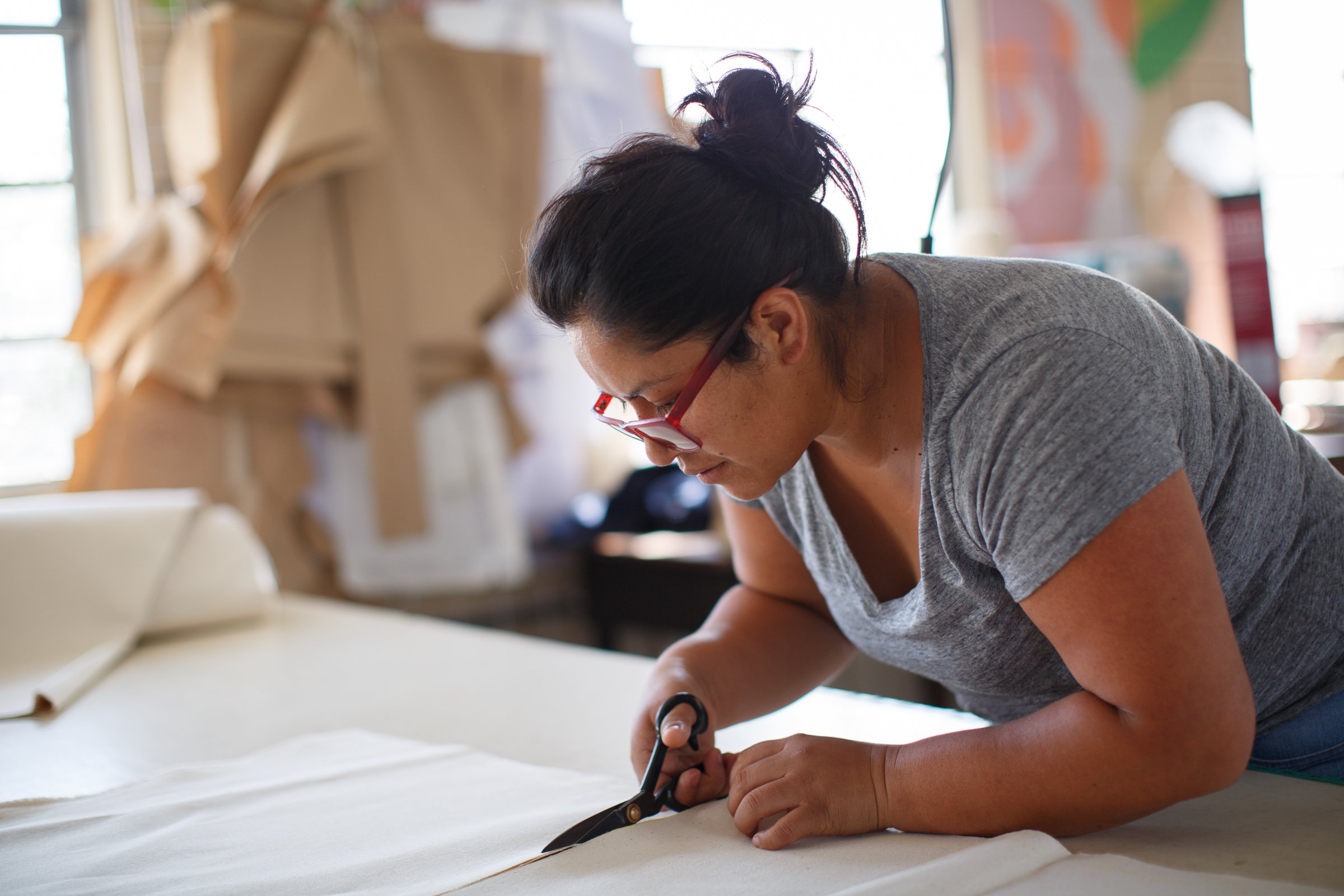
Given the prevalence of textile factories within the target community, this program is designed to prepare participants for entry-level positions as formal seamstresses.
-
This course, designed to facilitate basic computer literacy for beginners, assists participants in developing not only the competencies necessary for future employment but also confidence in navigating computers.
-
An intensive course focusing on the language that non-native English speakers need to operate in the workplace, including the incorporation of authentic workplace contexts, practical communication skills, and strong emphasis on the development of useful industry-specific vocabulary.
-
A monthly workshop through which participants practice the soft skills necessary for maintaining employment in the formal sector. These workshops will address punctuality, teamwork, conflict resolution, and efficiency among other essential skills in formal workplaces that women who have worked in the garbage dump may not have had exposure to.
-
All participants who engage in the aforementioned courses will be required to complete a six-week financial literacy training. This curriculum has been adapted from Columbia University’s Social Interventions Group financial literacy program and is designed to increase knowledge of financial concepts and exposure to formal banking institutions while encouraging sustainable savings habits. Upon graduation from the program, Creamos staff will accompany participants to set up a bank account, which is often mandatory for formal employment.
-
In collaboration with Level Up, Creamos offers a 3-month advanced programming course where students learn to build an executable computer program through various analytical tasks, generating algorithms and resource consumption. Students are offered a financial stipend to support them throughout their studies and are job-matched after successful completion of the course.
-
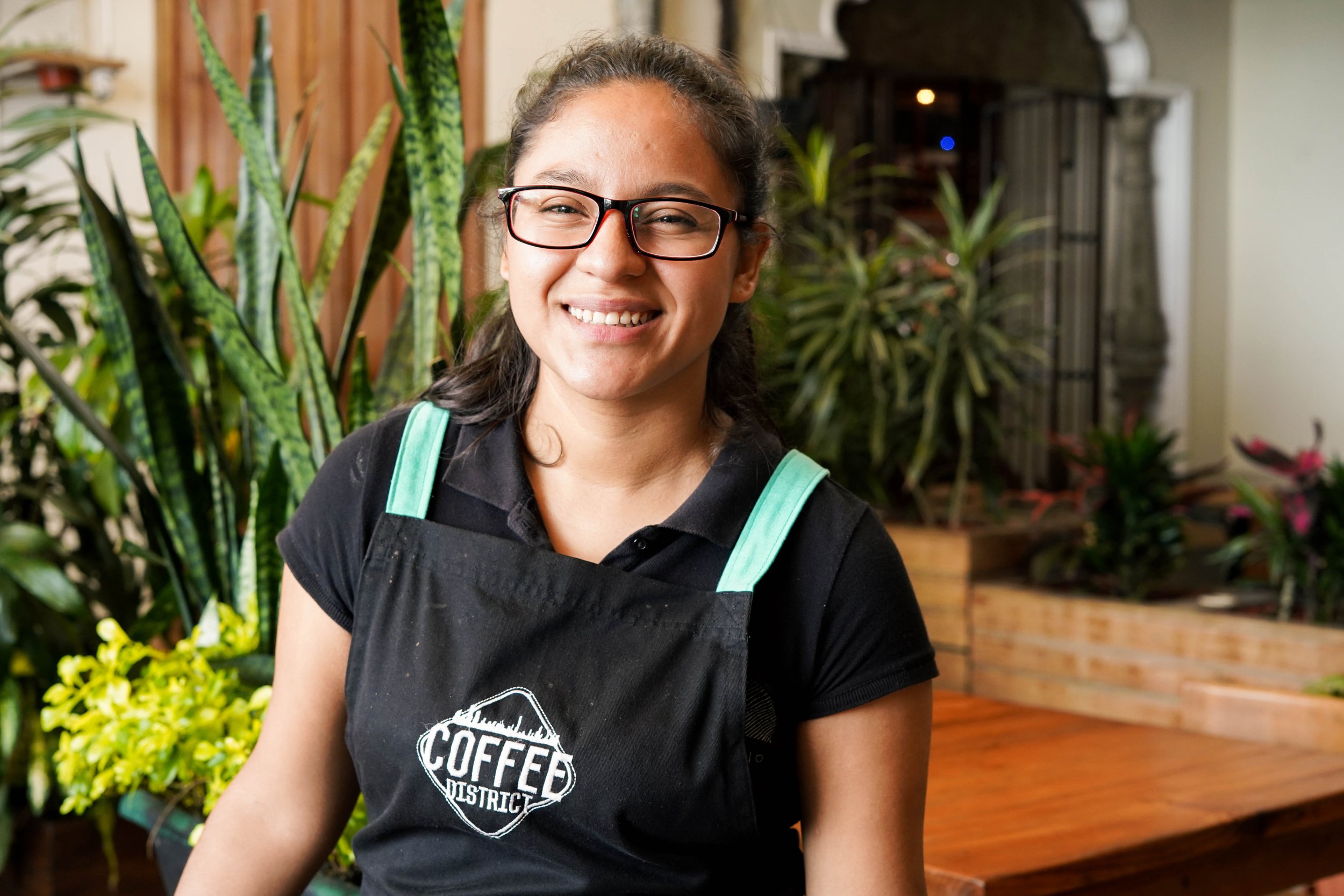
Creamos recently launched a Barista program in partnership with Coffee District. In the course, participants learn how to brew and prepare speciality coffee. Participants are awarded a Barista certification upon successful completion of the course.
Additional Support
-
All participants will have access to one on one “office hours” support from a member of the Department, during which they can explore their professional interests and opportunities, work on their resumes, seek support in filing employment-related government documentation, develop ideas for individual or community based entrepreneurship initiatives, engage in mock interviews, solicit professional clothing from the Creamos closet, etc.
-
Most women in the garbage dump community are mothers, and roughly half head single-parent households. Therefore, Creamos will provide free childcare for all program participants during working hours to ensure that child rearing responsibilities do not prohibit these women’s ability to work.
-
All participants will have free access to Creamos’ licensed Emotional Support Team’s range of services, including individual therapy, group therapy, family therapy, psycho-educational groups on topics including grief, substance abuse & senior’s support, legal consultations with the organization’s lawyer (in acute domestic violence and trafficking cases) and daily trauma-informed exercise and wellness activities.
WORKFORCE DEVELOPMENT TEAM

Eva Lopez (she/her/hers)
Workforce Development Coordinator
Eva’s involvement at Creamos began as a participant in our wellness program in 2018. She quickly became integrated into additional Creamos programs, attending sewing trainings and working as a seamstress while simultaneously pursuing her bachelor’s degree in Psychology. Her leadership within the community has led her to current position in which she will coordinate the Workforce Development Program.

Paola Ortiz (she/her/hers)
Workforce Development Associate
Paola first became involved at Creamos in 2019 through her participation in classes to learn how to make jewelry, and her professional trajectory at the organization began later that year as Financial Literacy Instructor. She is now stepping into her role in the Workforce Development Department while pursuing her bachelor's degree in English-Spanish Translation and Interpretation.

Eneko Arberas (he/him/his)
Workforce Development Director
Originally from the Basque Region of Spain, Eneko first became involved in community development in Guatemala in 2018. He now joins Creamos to lead the newly launched Workforce Development Department. He holds an undergraduate degree in Business Administration, a Masters in Sales and Marketing Management, and postgraduate degrees in both International Business and International Development Aid.
Funding Partners
The launch of this program would not be possible without the input and support of a wide variety of stakeholders - most notably, Creamos participants for identifying this opportunity gap, and partners who have provided their feedback, funding, and motivation to get us to where we are today.


Training Partners


